


Most business owners I meet have never looked at the two free tools Google gives them about their own website: Search Console (how people find you in Google) and Analytics (what they do once they arrive). And the ones who have looked usually walked away with the wrong conclusion — because the numbers are easy to misread.
So I did something I recommend to every client: I ran a full audit of my own website. Same tools, same scrutiny I’d give yours. What I found surprised even me, and every lesson applies directly to Chicago small businesses. Here’s the story.
Lesson 1: You can rank #1 on Google and still get zero clicks
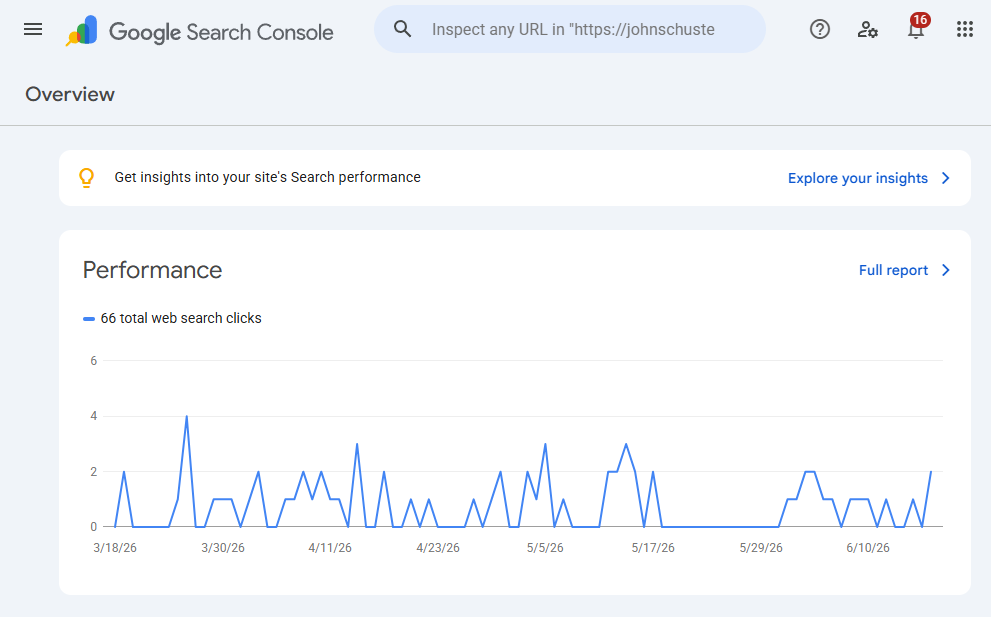 The first thing I checked was Search Console. My site ranks #1 in the Chicago area for “web design chicago” — thousands of times shown in search results. Sounds great, right?
The clicks from those #1 rankings? Basically zero.
That’s not a ranking problem — it’s a visibility problem. For local searches like this, Google fills the top of the page with paid ads and a “map pack” (the three businesses shown with a map and star ratings). Those grab almost all the clicks. The regular #1 result — mine — sits below all of it, where few people scroll.
The takeaway for you: “We rank well on Google” doesn’t automatically mean traffic. If you’re a local business, getting into that map pack — which comes down to your Google Business Profile and reviews — often matters more than your organic ranking. I can’t tell you that’s your situation without looking, which is exactly the point: you have to look.
Lesson 2: Your traffic numbers are probably lying to you
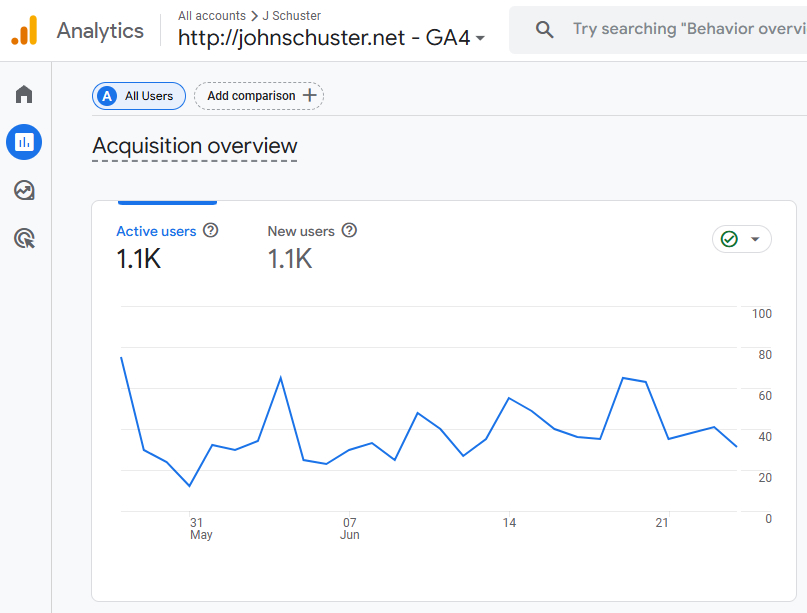
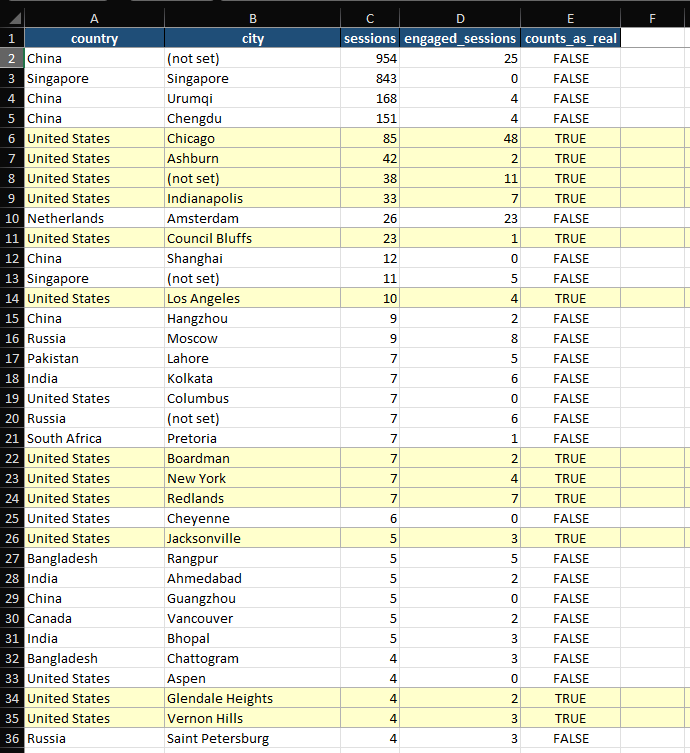 Next I opened Google Analytics. It showed roughly 2,700 visits over three months. Not bad for a one-person studio… except it wasn’t real.
When I dug into where those visits came from, the picture fell apart: the single biggest “city” was a data center in Singapore, followed by a couple in China — each sending more “traffic” than Chicago, my actual market. Ninety-one percent of it was labeled “Direct,” and almost none of it engaged with the site at all.
That’s bot traffic — automated junk that inflates your numbers and makes you think more people are visiting than really are. After filtering it out (keeping only real, engaged U.S. visitors), my honest number was about 150 real sessions, not 2,700.
The takeaway for you: if you’ve ever looked at your Analytics and felt good about a big number, there’s a real chance most of it isn’t human. Vanity metrics lead to bad decisions. A proper audit separates the real visitors from the noise so you’re making calls on facts.
Lesson 3: If you’re not tracking conversions, you’re flying blind
Here’s the number that actually matters for a business: not visits, but leads — people who fill out your contact form, call, or request a quote.
I made sure my Analytics was properly tracking form submissions as a conversion. Once I did, the real story emerged: of those ~150 genuine visitors, about 1 in 10 filled out a form. A 10% conversion rate is strong. My problem was never turning visitors into leads — it was getting enough real visitors in the first place.
You can’t know any of that without conversion tracking set up correctly. Most small-business websites I look at either don’t have it, or have it counting the wrong things.
The takeaway for you: the goal of your website isn’t traffic — it’s leads and customers. If you’re not measuring conversions, you have no idea whether your site (or the money you spend driving people to it) is actually working.
Lesson 4: One page can’t rank for everything
The last thing the data showed me: my homepage was trying to rank for every service at once, which left a cluster of valuable searches — “Chicago web developer,” “WordPress designer Chicago,” and more — stuck on page two.
The fix is straightforward: give each important service its own focused page, written around what people actually search for. I built those pages for my site, and they’re already starting to pick up visits. It’s the same approach I use for clients.
The takeaway for you: if you offer several services or serve several areas, a single catch-all page usually under-performs. Targeted pages rank better and convert better.
Why I’m telling you all this
Because almost every one of these problems is invisible until someone looks at the data — and most business owners never do. You could be ranking #1 and losing the clicks to a map pack. You could be celebrating traffic that’s 95% bots. You could be getting leads and not even know which pages produce them.
I do this analysis for my own business because it makes me better at it for yours.
The service: a Website Performance Audit
I now offer this as a standalone service for Chicago businesses. In a Website Performance Audit, I’ll:
- Connect and review your Google Search Console — what you rank for, where you’re losing clicks, and the fastest opportunities to climb.
- Set up or clean up Google Analytics — filter out bot traffic so you see your real numbers, not vanity metrics.
- Implement proper conversion tracking — so every form submit and lead is measured.
- Check your Google Business Profile and local visibility — the map-pack factors that drive local clicks.
- Deliver a plain-English report — what’s working, what’s broken, and a prioritized action plan. No jargon, no fluff.
You don’t need to be technical, and you don’t need to already understand any of this. That’s my job.
Find out what your website is really doing
If you’ve ever wondered whether your website is actually working — or you just want a clear, honest read on your Google data — let’s talk. I’ll walk you through what I find and what it means for your business.
Request your Website Performance AuditLooking for a new site instead of an audit? See my Chicago web design services or browse the portfolio.
Ready to see what your own data says? Request a website audit, and read the case study of my own site.
Pingback: Your Website Traffic Might Be Lying to You – Loudernet